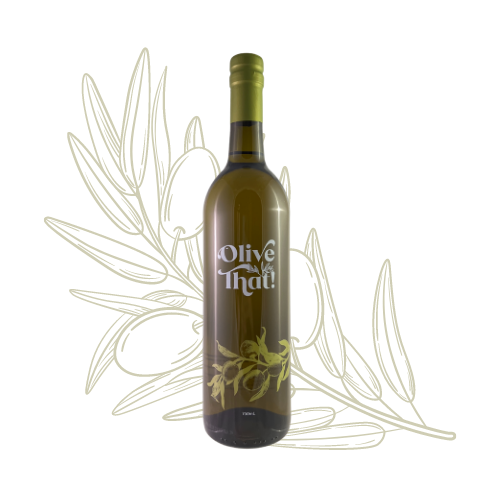
Robust Intensity Italian Peranzana Extra Virgin Olive Oil – October 2025 Harvest

Harvested from the Peranzana olives of Italy, this robust extra virgin olive oil boasts a complex, fruity, and herbaceous profile. Known for its bold flavour and aromatic intensity, it is ideal for cooks and enthusiasts seeking depth and freshness in every drop.

About This Oil

Tasting Notes Flavours reminiscent of a summer berry patch: fresh raspberries, blueberries, and strawberries combined with aromatic herbs and fresh grass. Deep notes of plum, white peach, thyme, rosemary, and bitter arugula finish with a fresh black pepper and cinnamon touch. Evaluated by Paul Vossen, February 2026.

Perfect Pairings Drizzle over roasted vegetables or grilled meats · Pair with berry or fruit-based dishes for creative finishing · Ideal for hearty salads or infused vinaigrettes · Complements cheeses like pecorino or fresh mozzarella · Its fruity and herbaceous intensity makes it excellent for drizzling, finishing, and enhancing bold dishes

Chemistry & Quality Analysis All of our extra virgin olive oils are third-party lab tested to verify freshness, purity, and quality.

Crush Date October 2025
Polyphenols 533
Acidity 0.11%
Fruitiness 7.0
Peroxides 5.1
Oleic Acid 72.10%
1,2 DAGs 91.70%
K232 1.84
Kosher Certified Orthodox Union

Ingredients: 100% first cold-pressed extra virgin olive oil from early-harvest green Peranzana olives

Nutrition Facts: Serving Size 1 tbsp (15ml) · Total Fat 14g · Saturated Fat 2g · Trans Fat 0g · Cholesterol 0mg · Sodium 0mg · Total Carbohydrate 0g · Protein 0g

Storage: Store in a cool, dark place away from heat and sunlight. Keep bottles sealed airtight to preserve freshness.

Compare with our Italian Coratina EVOO for even bolder flavour · Explore all Fresh 2025 Harvest Extra Virgin Olive Oils

Olive Oil 101

Common questions about extra virgin olive oil, answered simply and honestly.

1What does "extra virgin" actually mean?
Extra virgin is the highest grade of olive oil, but the label alone isn't enough. To qualify, an oil must pass strict chemical tests and a sensory evaluation by a trained panel. Many oils labelled extra virgin on grocery store shelves fail these standards. Every oil we carry has been tested and verified.
2What are polyphenols and why do they matter?
Polyphenols are naturally occurring antioxidants found in fresh olive oil. It's why you constantly hear "olive oil is really good for you!" That said, only green harvested olive oils test for polyphenol content. The polyphenols are responsible for that pleasant peppery finish at the back of your throat and are linked to a range of health benefits. The higher the polyphenol count, the fresher and more nutritionally dense the oil. We display the polyphenol count for every extra virgin olive oil we carry.
3What is a crush date and why should I care?
The crush date is when the olives were harvested and pressed. Unlike wine, olive oil doesn't improve with age. Freshness is everything. An oil without a crush date gives you no way of knowing how old the oil actually is. We only carry harvest-fresh oils and always display the crush date prominently. Best before dates on the other hand are arbitrary and will highly depend on storage conditions of the oil.
4Why is your olive oil more expensive than grocery store brands?
Early harvest, third-party lab tested, single-origin, single-varietal extra virgin olive oil costs more to produce than the blended, commodity oils that fill most grocery store shelves. You're paying for transparency, traceability, and quality that's been verified, not just labelled. Most customers tell us once they taste the difference, they can't go back to grocery store olive oils.
5Can I cook with extra virgin olive oil?
Yes, and you should! The smoke point myth is largely outdated. High quality EVOO has a smoke point ranging from 374°F to 405°F (190°C to 207°C), making it suitable for most everyday cooking. Oils with higher polyphenol counts are actually quite heat stable. Use mild oils for delicate dishes and dressings, and save your robust oils for roasting, grilling, and bold flavours.
6How should I store my olive oil?
Keep it away from heat, light, and air. A cool dark cupboard is ideal; not next to the stove and not on a sunny countertop. Avoid storing in clear glass near windows. Our bottles are dark-tinted for a reason.
7How long does olive oil last?
A properly stored, high quality EVOO will last 12 to 18 months from the crush date. That said, the sooner you use it the more polyphenols you'll actually benefit from. Freshness is where the flavour and health value live. Our best advice? Start with a smaller bottle to see how quickly you go through it and how much you like it in your everyday cooking. If it's gone fast, move up to a larger size, or just come back sooner for a fresher bottle.
8Can I taste the oils before I buy?
Absolutely! That's what we're here for. We offer a guided tasting experience at both our Whitby and Markham locations so you can taste everything before you commit to a bottle. We want to make sure you'll like what you're taking home!
9Your glass bottles are really nice and it doesn't feel right to just recycle them. Do you offer refills?
We do not offer refills, and here's why. Bottles are notoriously difficult to clean thoroughly, and invisible residue or water left inside can cause a fresh oil to spoil prematurely. We want every bottle you take home to be as good as the one you tasted in store, and that means starting with a clean bottle every time. We recommend recycling your empty bottles and saving the reusable corks (they'll fit most wine or sparkling drink bottles)!
10What is Fruitiness and what does the score mean?
Fruitiness refers to the aroma and flavour characteristics derived directly from fresh, healthy olives. It's evaluated by a trained sensory panel and scored on a scale of 0 to 10. A higher fruitiness score indicates a more vibrant, fresh olive flavour. It's one of the key markers used to assess whether an oil meets the true extra virgin standard.
11What are Peroxides and why do they matter?
Peroxides are a measure of oxidation — essentially how much the oil has been exposed to air and begun to degrade. The lower the peroxide value, the fresher the oil. True extra virgin olive oil must have a peroxide value below 20 meq O₂/kg. Our oils consistently test well below that threshold.
12What is Oleic acid?
Oleic acid is the primary monounsaturated fatty acid in olive oil and one of the reasons EVOO is associated with heart health benefits. A higher oleic acid percentage generally indicates better stability and a longer shelf life. Quality extra virgin olive oils typically test between 55% and 83% oleic acid.
13What are 1,2 DAGs?
DAGs (diacylglycerols) are a freshness marker. Fresh olive oil contains mostly 1,2 DAGs, while older or refined oils shift toward 1,3 DAGs over time. A 1,2 DAG score above 70% indicates a fresh, high quality oil. As the oil ages this number drops, making it one of the most reliable indicators of true freshness that you won't find on most grocery store labels.
14What is K232?
K232 is a UV absorption measurement that detects the presence of oxidation compounds in olive oil. A lower K232 value means less oxidation and a fresher, higher quality oil. The IOC standard requires K232 to be below 2.50 for extra virgin classification. Our oils are tested to ensure they meet and exceed this standard.
15What is the difference between Northern and Southern Hemisphere harvests?
Olives are harvested in autumn in both hemispheres — October and November in the Northern Hemisphere (Spain, Italy) and April and May in the Southern Hemisphere (Chile, Peru). This means we can offer harvest-fresh oils almost year-round by sourcing from both. Southern Hemisphere oils arrive in late summer, and Northern Hemisphere oils arrive mid-winter.
16What does single-varietal mean?
A single-varietal olive oil is made from one specific variety of olive, such as Arbequina, Picual, or Coratina, rather than a blend of multiple varieties. Single-varietal oils have distinct flavour profiles tied to that specific olive, much like a single-grape wine. Blended oils are more common commercially because they're cheaper to produce, but single-varietal oils offer a more authentic and traceable tasting experience, and the antioxidants in the form of polyphenols!

Exploring our oils? ← Back to All Extra Virgin Olive Oils   |   Infused EVOO   |   Fused EVOO   |   Toasted Sesame Oil

Taste Before You Buy

Visit us in Whitby or Markham for a guided tasting experience. Taste everything, ask anything, and leave with an oil you'll love.

We use cookies (and other similar technologies) to collect data to improve your shopping experience.